Cleaner machines.
Ice you can serve with confidence.
Mineral scale, slime and buildup need a consistent equipment-care routine. Start with No-Rinse and a procedure matched to your ice machine.
No-Rinse for ice-machine care
No-Rinse combines cleaning, descaling and food-contact sanitizing uses in one product. Follow the required cleaning and sanitizing sequence for the machine and the product label.
- Removes mineral scale and hard-water buildup.
- Nickel-safe formula, as described in the supplied sales flyer. Confirm compatibility with the complete machine, its seals and surfaces.
- For ice-machine components and other label-listed food-contact surfaces.
- NSF registered D2, registration number 143509.
Tell us your manufacturer, model, water conditions and current cleaning routine so we can help select the right procedure.
Explore No-Rinse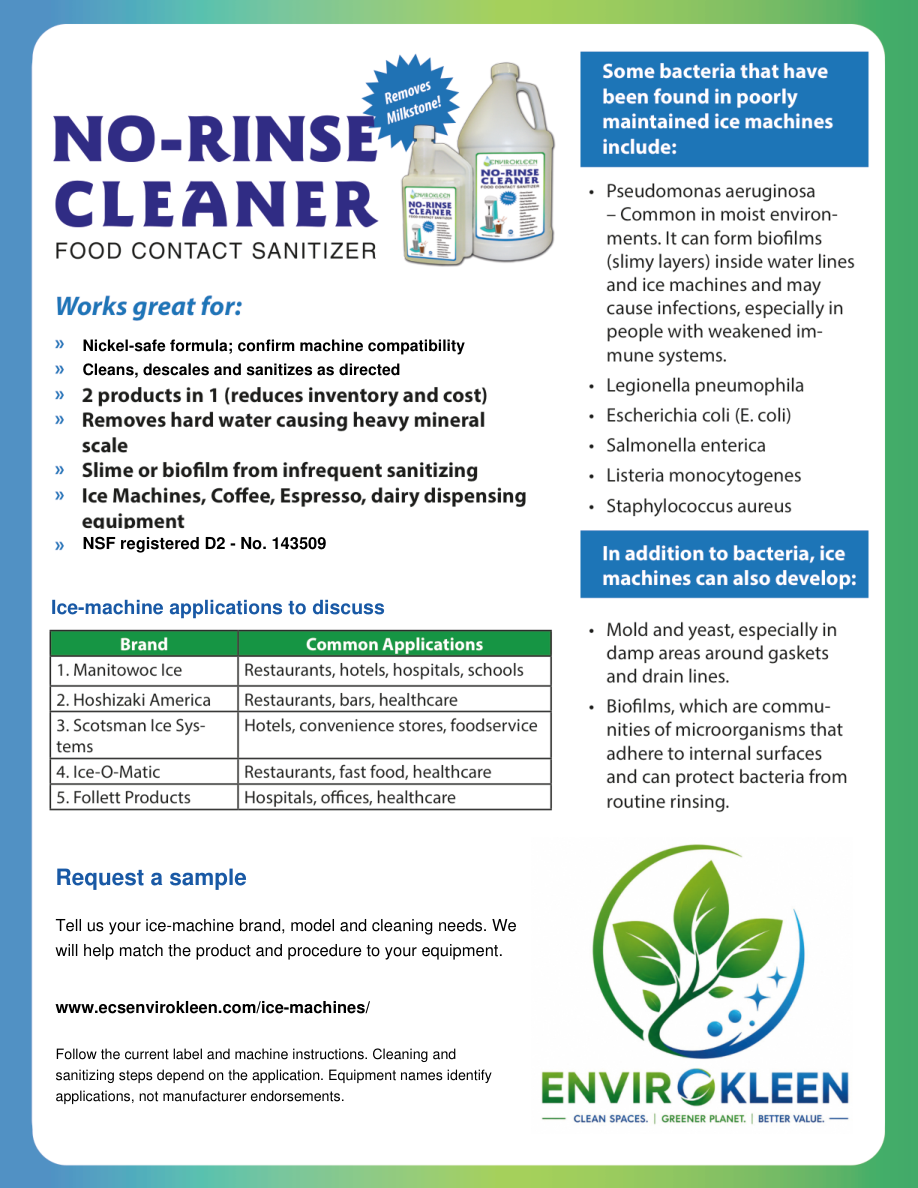
What the ice-machine research found
Kanwar and colleagues studied 64 ice machines in five hospitals and two nursing homes. Gram-negative bacteria and/or Candida were recovered from:
These findings concern the sampled healthcare machines, not every restaurant or ice machine. They explain why hidden wet areas deserve attention; the study did not test No-Rinse.
Read More Equipment-Hygiene ResearchBring your brand and model
The supplied sales material identifies applications involving Manitowoc Ice, Hoshizaki, Scotsman, Ice-O-Matic and Follett. Share the exact model when requesting a distributor or application review. These equipment names do not imply manufacturer endorsement.
Find a Distributor for Your Ice MachineBuild the routine around the machine
- Identify the deposits. Check accessible bins, chutes and components for scale and residue.
- Use the machine-specific process. Follow the equipment manual for preparation, disassembly and cleaning access.
- Clean and sanitize as directed. Use the labeled concentration, contact time, rinse and draining steps.
- Keep a cleaning record. Record the service date and follow the manufacturer’s maintenance schedule.