Milkstone and mineral buildup in beverage equipment?
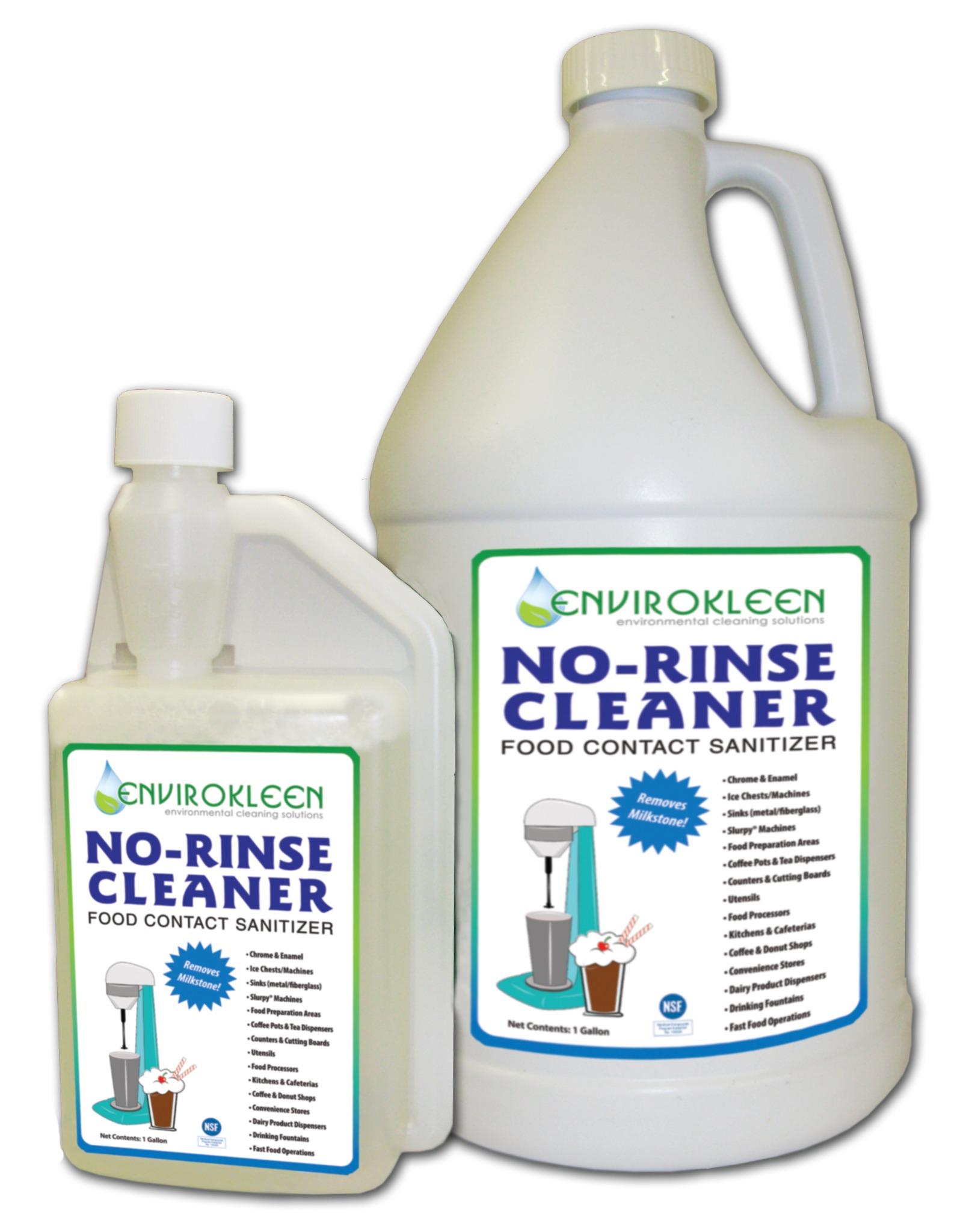
An acid cleaner and food-contact sanitizer for the equipment and hard, nonporous surfaces identified in the applicable label. Match the cleaning and sanitizing steps to your machine and its soils.
Submit your request on our website. EnviroKleen will confirm sample availability and demonstration arrangements.
Save time, money and headaches.
Using No-Rinse helps you save time, money and headaches by removing stubborn buildup and keeping beverage and food equipment ready for service.
No-Rinse: our first recommendation for
- Dairy dispensing equipment
- Ice machines
- Coffee equipment
- Frozen beverage machines
- Beverage lines
- CIP systems
Match the application and procedure to the product label and your equipment requirements.
Best for
Soft-serve and milkshake equipment.
Check before use
Equipment model, current label, concentration and separate cleaning/sanitizing steps.
No-Rinse
- Soft-serve and milkshake equipment
- Beverage dispensers
- Ice machines
- Coffee and tea equipment
- Dairy and bottling equipment
- Food-contact surfaces
Watch: Cleaning Beverage Equipment with No-Rinse
Join Adam Kamman for a walkthrough of No-Rinse applications in shake, frappé and coffee equipment. English instruction is followed by a Spanish-language segment.
Jump to a topic
- 1:01 — Shake-machine preparation and cleaning
- 3:18 — Sanitizing and syrup lines
- 4:00 — Frappé cleaning
- 5:37 — Cost comparison (recorded examples)
- 6:38 — McCafé procedures
- 8:04 — Spanish-language instruction
This recorded supplier training includes equipment-specific procedures and historical cost examples. Confirm the current product label and your equipment manufacturer’s instructions before use, including dilution, contact time, rinsing and sanitizing requirements. Cost examples in the recording are not current quotes.
Ask About Your EquipmentClean. Descale. Sanitize.
Milkstone and scale removal, routine cleaning and food-contact sanitizing address different needs. Follow the sequence required by the current product label and the equipment manufacturer.
Beverage equipment
Plan cleaning around the machine, its milk or beverage circuit and its removable parts.
Explore →See the supplied demonstration
Review a milkstone before-and-after example and the limits of the evidence.
Explore →Wash, rinse, sanitize
Understand the separate stages of a sink-based cleaning program.
Explore →Technical substantiation
The supplied technical data summarizes performance testing. A 2015 compatibility letter discusses phosphoric acid and material compatibility; it does not establish compatibility with every complete machine or seal. The supplied NSF letter is dated 2010 and is not presented as proof of a current listing.
Directions & technical information
Remove soil, clean and rinse with potable water before the specified sanitizing step. “No rinse” refers to the final sanitizing step as directed, including draining and any required air drying. Use the current label for concentration, contact time and application-specific directions. The concentrate is corrosive.
Supplier-provided reference documents. Match the product and version to your container. Ask your distributor for the latest label and SDS.
Packaging to discuss with your distributor
Supplier packaging references list 4 × 32 fl oz; 2 × 1 gallon. Package codes and availability may vary by channel; confirm the current pack before ordering.
Related cleaning needs
Tell us what you need to clean.
Share your location, equipment and cleaning challenge. EnviroKleen will help match the product and distributor.
Evaluate the cleaning process on your machine
EnviroKleen reports examples in shake and sundae equipment where the automated cleaning process decreased from three–five hours to about 90 minutes using No-Rinse. This is reported application experience, not a universal cycle time or a measurement of hands-on labor. Results depend on the machine, buildup and approved procedure.
Discuss a sample and have your service agent evaluate the process on your equipment. Follow current product directions and the equipment manufacturer’s requirements.
Discuss a Sample EvaluationRead the science behind equipment hygiene
Original journal articles provide context on ice-machine components, dairy products, coffee-machine waste and hand hygiene. Product selection and use still depend on your equipment and current label.
Read Original Research